

Anxiety Therapy on Cape Cod
When anxiety makes life feel smaller, therapy can help you move toward confidence, calm, and relief.
Start anxiety therapy and learn practical, evidence-based strategies to face fears and feel more like yourself again. Available on Cape Cod and virtually across Massachusetts.
Is this what you’re going through?
Anxiety can feel like your mind and body are constantly preparing for something to go wrong. You may know, logically, that you are probably safe — but your body still reacts as if there is a real threat. Anxiety can show up as racing thoughts, physical tension, avoidance, irritability, panic, overthinking, reassurance-seeking, or a constant feeling that you cannot fully relax.
Many clients with anxiety feel frustrated because they “know better,” but still feel stuck. Others feel embarrassed that something seems harder for them than it appears to be for other people. But anxiety is not a personal failure. Anxiety disorders are among the most common mental health concerns, and effective professional support is available.

Why should you start anxiety therapy?
You may want to start anxiety therapy when worry, fear, panic, stress, or avoidance is taking up too much space in your life. Therapy can help you understand what is happening, reduce symptoms, and learn practical tools for responding differently when anxiety shows up.
Anxiety treatment may be helpful if you are:
Avoiding situations, conversations, tasks, places, or responsibilities because of anxiety
Feeling physically tense, restless, panicky, or overwhelmed
Spending a lot of time overthinking, replaying, planning, or seeking certainty
Having trouble sleeping or relaxing
Struggling with school, work, parenting, relationships, or daily routines
Feeling like anxiety is making your life smaller
Relying on reassurance, checking, escape, or avoidance to get through the day
Feeling stuck even though you have tried to reason with yourself
Professional support can help you move beyond temporary coping and begin changing the patterns that keep anxiety going. A skilled anxiety therapist can help you identify triggers, understand the anxiety cycle, learn evidence-based coping strategies, and gradually approach situations you have been avoiding.
Evidence-based approach to anxiety treatment in Massachusetts
At Proven Relief Therapy, anxiety treatment is grounded in evidence-based care. That means therapy is guided by approaches that have been carefully studied and shown to help with anxiety-related concerns.
Treatment is always tailored to each client’s needs. Anxiety can look very different from person to person, so therapy begins by understanding your symptoms, triggers, avoidance patterns, strengths, goals, and life circumstances. For children and teens, anxiety therapy may also include parent guidance and practical strategies for home, school, and family routines.
Effective anxiety treatment is not just about talking through worries or trying to convince yourself not to be anxious. It is about learning how anxiety works, identifying the behaviors that keep anxiety going, and practicing new responses that help your brain and body learn that you can overcome discomfort, uncertainty, and fear.
Find out more about modalities we use in anxiety therapy
Cognitive Behavioral Therapy (CBT):
It’s one of the most widely used evidence-based treatments for anxiety. CBT focuses on the connection between thoughts, feelings, physical sensations, and behaviors.
When anxiety is present, the mind often overestimates danger and underestimates coping ability. A person may begin avoiding feared situations, seeking reassurance, over-preparing, or trying to eliminate uncertainty. These strategies can bring short-term relief, but they often keep anxiety strong over time.
CBT is effective because it helps you change the patterns that maintain anxiety. Instead of only asking, “How can I feel less anxious right now?” CBT also asks, “What is teaching my brain that this situation is dangerous, and what can I practice differently?”
Exposure and Response Prevention (ERP):
It’s a specialized form of CBT that is most often associated with OCD, but exposure-based work can also be very helpful for anxiety. ERP focuses on helping clients gradually face feared thoughts, sensations, situations, or triggers while reducing the avoidance, reassurance-seeking, rituals, or safety behaviors that keep anxiety going.
ERP is not about overwhelming you or forcing you to do things before you are ready. A thoughtful anxiety therapist helps create a gradual plan that starts with manageable steps and builds over time.
ERP is effective because avoidance teaches the brain that anxiety is dangerous and that escape is necessary. ERP helps the brain learn something new: anxiety can rise and fall, discomfort can be tolerated, and feared situations are often more manageable than anxiety predicts.
What can you expect from anxiety therapy?
Anxiety therapy is collaborative, practical, and goal-oriented. You can expect to work with your therapist to understand your anxiety, identify what keeps it going, and practice skills that help you respond differently.
Therapy is tailored to your needs. Some clients need a strong focus on exposure practice. Others benefit from cognitive restructuring, behavioral experiments, parent coaching, emotion regulation skills, or help reducing avoidance and perfectionism. Many of my clients benefit from a combination.
The goal of anxiety therapy is to help anxiety become less controlling, less disruptive, and less limiting — so you can make choices based on your values rather than fear.
Anxiety therapy benefits
Learn how your thoughts, body sensations, emotions, and behaviors interact.
Reduce avoidance
Gradually return to situations, activities, relationships, and responsibilities that anxiety has made difficult.
Practice approaching anxiety triggers in a structured, supportive way.
Learn how to respond to doubt and uncertainty without getting stuck in repeated checking, researching, or asking.
Build the ability to move forward even when anxiety is present.
Learn how anxiety affects the body and practice responding differently to physical symptoms.
Anxiety treatment can help reduce the interference anxiety creates in daily routines and meaningful activities.
Develop practical tools for managing worry, stress, avoidance, perfectionism, and emotional overwhelm.
Therapy helps you shift from “What will make my anxiety go away right now?” to “What kind of life do I want to build?”
Evidence-based treatments such as CBT and exposure-based therapy ave strong research support for anxiety disorders.
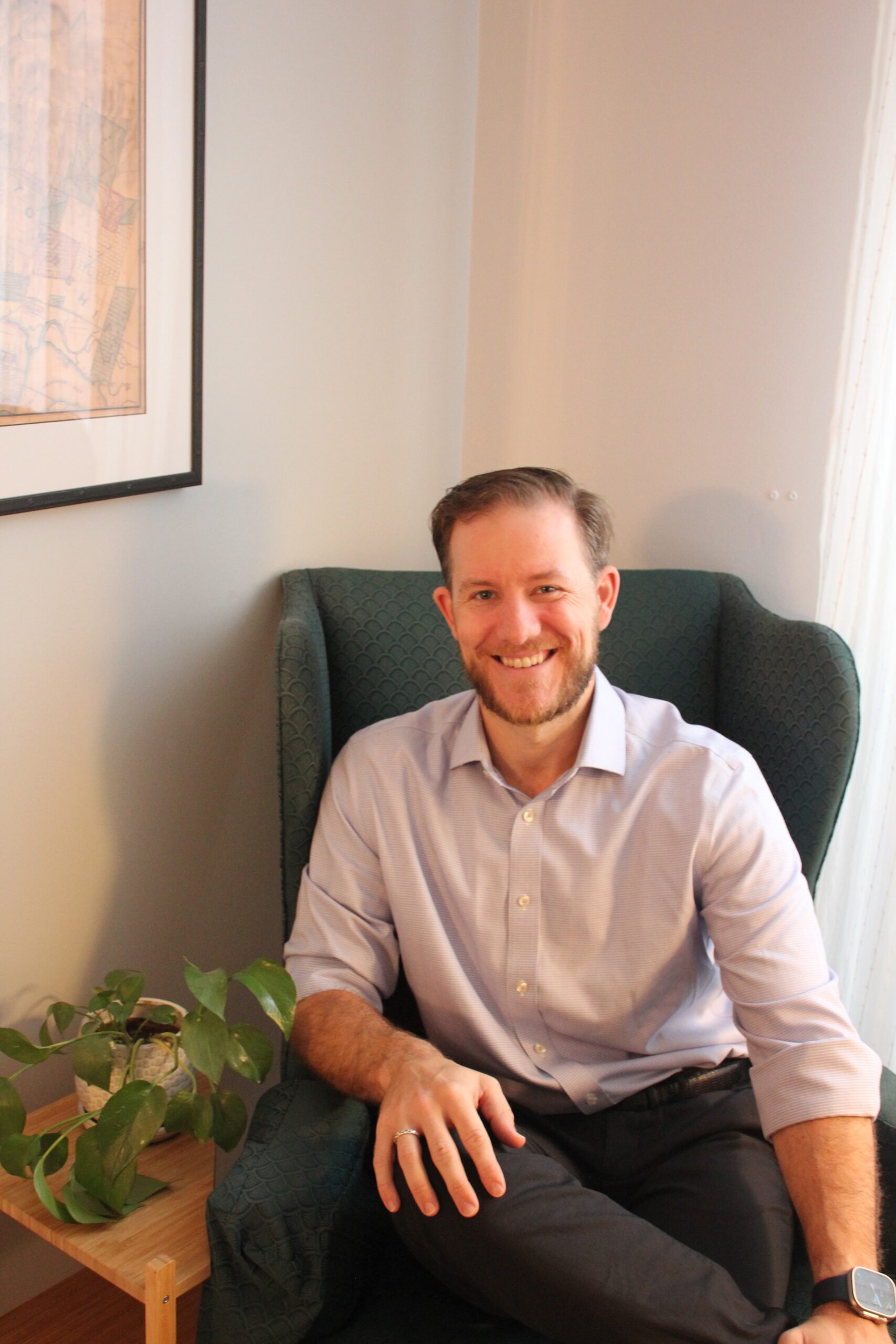
Meet Dr. Alex Tice, an experienced anxiety therapist
Dr. Alex Tice is a licensed clinical psychologist who specializes in helping children, teens, adults, and families manage anxiety, worry, panic, avoidance, perfectionism, and related concerns. With more than 10 years of clinical experience, he uses structured, evidence-based approaches including Cognitive Behavioral Therapy and Exposure and Response Prevention to help clients understand what keeps anxiety going and learn practical tools to respond differently.
Dr. Tice’s style is warm, collaborative, and goal-oriented. He helps clients recognize anxiety patterns, gradually face situations they have been avoiding, develop coping skills that work in real time, and build confidence for long-term relief. His background includes work as a staff and supervising psychologist at Kennedy Krieger Institute, where he supervised and taught evidence-based treatments to emerging clinical psychologists.
Dr. Alex Tice provides therapy services on Cape Cod and across Massachusetts and over 40 other states.
Everything you need to know about anxiety treatment with us
Payment options
Out-network with insurance. Superbills can be provided for clients to submit for possible out-of-network reimbursement. Payment is due at the time of service. We accept credit cards (including HSA/FSA cards) as well as other online payment methods (e.g. Zelle) for payment.
Cost per session
Initial Diagnostic Evaluation 60 mins – $275
60-minute Psychotherapy session – $275
45-minute Psychotherapy session – $210
Location
Cape Cod, MA – in person sessions available soon!
Virtually across Massachusetts and 44 other states!
You can win with anxiety! Book a free initial consultation in Harwich and across Massachusetts
You don’t have to figure this out alone. Book a free initial consultation with Dr. Alex Tice to learn more about treatment options and next steps.
Contact Us:
Phone: (667) 899-8292
Email: support@provenrelieftherapy.com
Office location: 38 Sisson Rd #303, Harwich Port, MA 02646
Therapy services in Harwich and across Cape Cod and Massachusetts